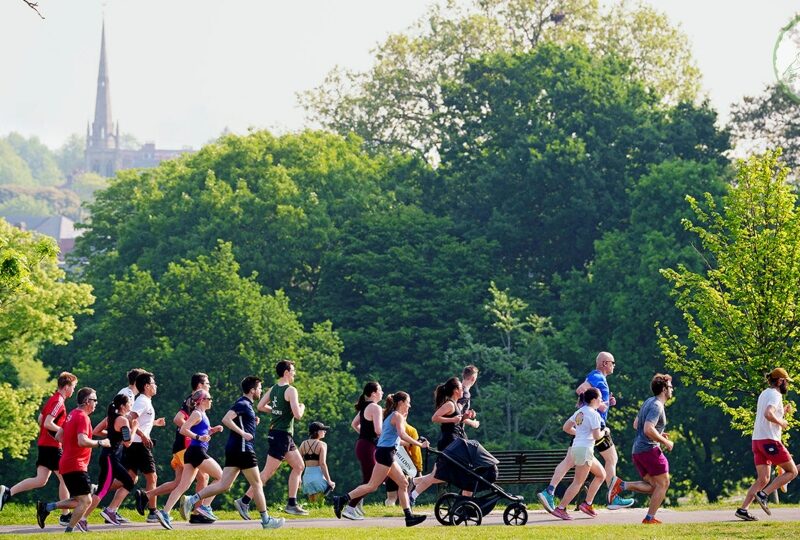
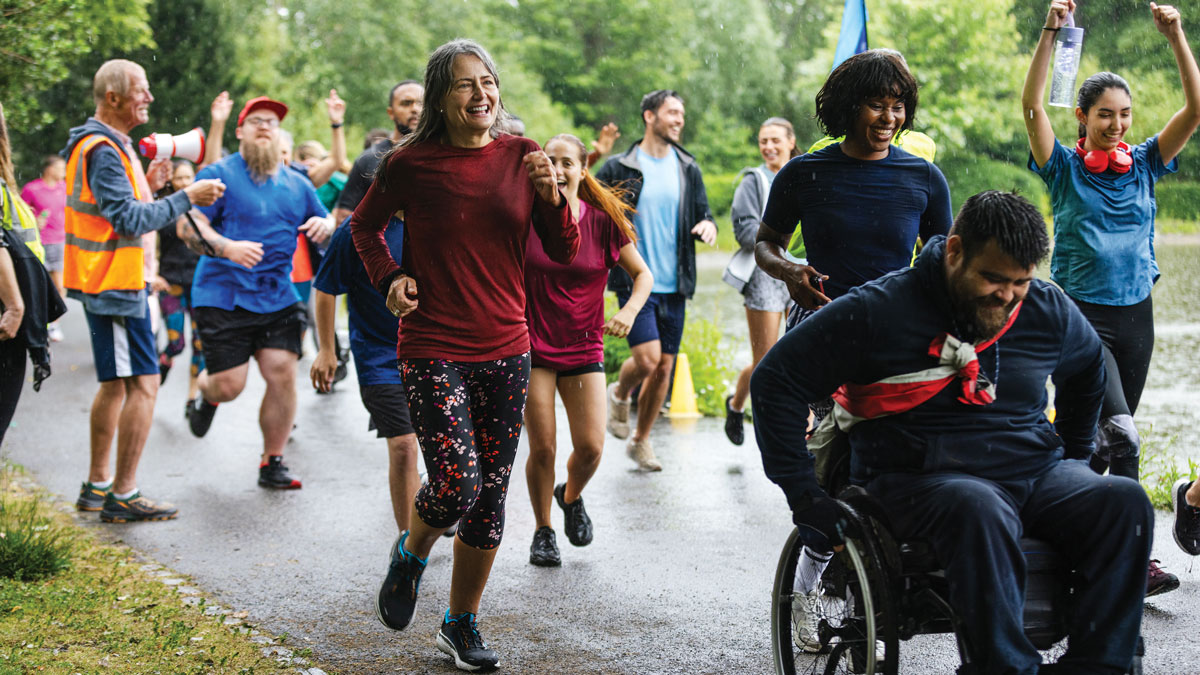
Parkrun is a completely free, weekly 5k community that takes place in parks, promenades, and open spaces across the globe every Saturday morning. It’s organised by local volunteers and open to anyone and everyone, regardless of their fitness level or running experience. You can run, jog, walk, or mix all of those up together – there’s zero pressure to compete or finish quickly, and that’s all part of the big appeal.
For a lot of people, particularly those looking for an easy, accessible way to get moving, parkrun for beginners can feel a bit confusing, perhaps even daunting. Do you need to be fast? What happens when you arrive? This is where a clear parkrun explained for first timers guide can come in clutch.
If you’re wondering what actually happens at parkrun, this guide breaks it all down so you can feel confident rocking up for your first event knowing precisely what to expect.
What Is Parkrun & How Does It Work?
Parkrun is a free, weekly 5k event that happens every Saturday morning. It is set up and run entirely by local volunteers, and tailored to be as inclusive and welcoming as possible for anyone who wants to take part, regardless of their age, fitness, or pace.
So, how does parkrun work? Each event starts at a set time – typically 9 am – when participants gather for a short briefing before getting going on a marked 5k course. It’s up to you whether you want to run, jog, or walk. The emphasis isn’t on competing; it’s all about community and participation.
If you’re wondering what is parkrun in more practical terms, it’s a timed event, though not a race in the traditional sense. You’ll need to register online to receive a personal barcode; this barcode is scanned at the end of every event to record your time.
Again, from setting up the course to scanning your barcode, everything at parkrun is done by amazing local volunteers.
Courses vary by location, but the format is totally the same wherever you go, which makes it easy to rock up to any parkrun event and know precisely what to expect.

Check Out Our Complete Guide To Parkrun For First-Timers
Do You Need To Register For Parkrun?
Yes, you do need to register for parkrun to receive a time at the end of each event. However, it’s totally free and only takes a few minutes online. Once you sign up, you’ll be given your own personal barcode, which is how your time is recorded at each event you attend.
The registration process is really easy: you create an account on the parkrun website, enter your details, and print (or save) your barcode. You can also find your barcode on the official parkrun app, which is probably the easiest approach these days. You only need to register once, and the same barcode can be used at any parkrun event worldwide.
A common question we’ve seen online is: Do you need to register for parkrun every time? The answer is no – it’s a one-time registration.
At the end of each event, a volunteer will scan your finish token along with your barcode. This links your time to your profile so you can see your results online later that day. Without your barcode, you’re still free to take part; you just won’t receive an official time.
Of course, if that all isn’t for you, you’re more than welcome to run parkrun along with everyone else and just duck out before the finishing funnel, skipping the token/barcode section entirely.
Parkrun Rules Explained (The Basics You Need To Know)
Parkrun is designed to be simple, inclusive, and welcoming; however, there are a few key rules and expectations that help ensure everything runs smoothly. If you’re new and wondering how strict can it be really? – The honest answer is: not very, but there are still a handful of basics worth remembering before your first event.
You can Walk, Jog, or Run
One of the most important parkrun rules is that there is zero requirement to run. You’re free to walk, jog, run, or combine all three throughout the course. There is no minimum fitness level, no cut-off pace, and no expectations to finish like a pro sprinter.
This is the defining quality that makes parkrun so accessible. Whether you’re training for a race, returning to exercise, or just looking to kickstart your weekend with a gentle stroll and some good company, you’ll fit right in. No one is checking how fast you’re going, and participants are all taking part side-by-side.
You Must Bring Your Barcode
A simple but important rule: you need your barcode if you want an official time.
When you finish, volunteers scan a small finish token followed by your personal barcode. This links your result to your parkrun profile (again, the parkrun app is a gold mine with all this data). If you forget it, you can still complete the course, but you won’t show up in the results.
You can print off your barcode or save it as a screenshot on your phone if the app isn’t for you, but it needs to be readable and accessible on the finish line. It’s a good idea to have a couple of spares in your running belt or phone case, just to be sure.
It’s Not a Race (But it is Timed)
One of the biggest concerns we’ve seen people online sharing revolves around the question of is parkrun competitive? And, technically, your time is recorded. Results are published, and finishing positions are listed, but parkrun is not a race.
There are no official winners, no finishing medals, no prize money, and no pressure to compete against others. Most people are focused on their own progress, personal milestones, or simply soaking up the experience. From fast club runners at the front to walkers at the back, parkrun is the most inclusive running event in the world, celebrating runners of all abilities.
That said, if you are looking to track improvements over time, parkrun is certainly one of the best benchmarks for comparing your results week by week.
Check Out Our Guide On How Parkrun Results Work
Be Respectful to Other Participants (and the Public)
Parkrun is built on community spirit, so basic etiquette is important. This doesn’t mean strict rules, but rather being considerate of others sharing the course.
Most run directors will remind you in the pre-run briefing that parkrun doesn’t have priority in the public spaces it takes place in, and that being mindful of other users of that location is the best way of ensuring parkrun keeps its good reputation.
Try not to block the path if you’re walking or slowing down – try to move to one side when it’s safe to allow faster runners to pass comfortably. Don’t cut across the course or suddenly come to a halt in crowded sections, particularly near the start and finish lines.
Thanking the marshals is arguably the best bit of good form you can have as a parkrunner; these events rely on the guys and gals who have given up their Saturday morning to put it on, so show them some love as you go by.
Stay in Your Place When You Finish
When you’ve finished your 5k parkrun event, you’ll reach a finishing funnel where you line up to receive your finishing token, which is then scanned along with your personal barcode for your official time.
It’s important to close the gap between yourself and the runners in front of you, ensuring that everyone else finishing can get over the line without hassle.
Once you’re in the line, be sure to stay in the position that you finished. Cutting ahead or allowing someone else to jump ahead will confuse the finishing order and may lead to your time being incorrect.
Dogs, Pushchairs, and Headphone Rules
When it comes to parkrun etiquette, there are a few common questions about what you’re allowed to bring with you.
Dogs are allowed at most parkruns, provided there is just one per runner, and they are kept on a short, controlled lead. This is for safety, as courses can get busy and unpredictable.
Pushchairs and strollers are welcome, but it may be a good idea to start closer to the back of the field, as congestion can be pretty heavy when the event gets underway.
Unlike most timed runs, headphones of any shape or size are fine to use, but do try to keep the volume to a level that you can still hear any other runners or marshals with any instructions. Always listen to the pre-race briefing before whipping the tunes on.
Overall, though, the rules are minimal on purpose. Parkrun works so well because it’s simple, flexible, and community-driven, which means that most of the “rules” here are just about common sense and respect for others.
What To Expect At Your First Parkrun
If you’re planning on attending parkrun for the first time, it’s good to know exactly what the morning will look like so you can turn up feeling relaxed, rather than unsure. This is a simple breakdown of what to expect at parkrun, so you know what’s coming from start to finish.
Most events kick off at 9 am on Saturday, so it’s a good idea to arrive 15-20 minutes early. This gives you a decent chunk of time to warm up, find the start line, take in the surroundings, and get any pre-run rituals out of the way (I always do my shoelaces again, just to be sure).
Before the run starts, there’s a pre-run briefing. The run director will welcome everyone, explain the course, mention any safety notes, and highlight any tourists, first-timers, or milestones that day. If it’s your first time, this is your chance to get a little round of applause, if you fancy that sort of thing!
When the run gets going, the atmosphere is casual rather than competitive. People naturally spread out, and you can run at whatever pace feels comfortable to you, whether that be running, jogging, or walking. There’s no pressure, just participation.
At the finish line, you’ll go through a laid-out funnel system where you’ll be given a finish token. Then you move to the barcode scanners, where a volunteer will scan both your barcode and token so your result can be recorded.
After that, you’re all done! A lot of runners will stay behind for a chat, a post-run coffee, or just to help out with any post-run cleanups before heading off.
Check Out Our Guide On What Time Parkrun Starts
Can You Walk Parkrun Instead Of Running?
Absolutely – you’re more than welcome to walk parkrun rather than run it. There isn’t a requirement to run at any point during the 5k event, and plenty of participants choose to walk the whole course every week. Parkrun is all about inclusivity, so whether you’re walking, jogging, or doing a blend of both, you’re taking part exactly as intended.
This is one of the most reassuring aspects for new-time or less-experienced runners giving parkrun a go, especially if they’re worried about keeping up. There is no time limit, no pressure to finish quickly, and no expectation about fitness level.
Walking is also a great way of enjoying the event, taking in the surroundings and building your confidence as you go. Many people start out by walking and naturally progress over time; however, there’s no expectation to change how you take part.
Check Out Our Guide On Walking At Parkrun
Do Children Or Beginners Need To Be Fit?
No – children and beginners do not need to be fit to take part in Parkrun. The event is designed to be as welcoming as possible to as many people as possible, regardless of their fitness or experience. Whether someone is walking the whole way, jogging slowly, or stopping for breaks, they are still taking part in exactly the way Parkrun is intended.
This makes the event incredibly welcoming for families, people returning to exercise, or anyone who feels unsure about trying something new. You don’t have to train beforehand or meet any standard to join in.
The focus is on participation, not performance, so there’s no pressure to keep up with others or achieve a certain time. Everyone goes at their own pace, and the atmosphere is supportive rather than competitive, making it a welcoming, accessible environment for children and families to get involved in regular physical activity.
Common Parkrun Mistakes To Avoid
Parkrun is exceptionally beginner-friendly, but there are a couple of mistakes you can run into on a first visit. Knowing them in advance makes the whole experience smoother and less stressful.
- Forgetting your barcode – This is the most common issue. Without it, you won’t get an official time, even if you complete the run.
- Starting too far forward – If you’re walking or jogging slowly, it’s better to start further back to avoid congestion and make the start easier for everyone.
- Going off too fast – Many beginners get caught up in the excitement and begin quicker than they expected, which only leads to blowing up later on. Pace yourself early.
- Not listening to the briefing – The pre-run talk often features useful course-specific updates like hazards and changes.
- Blocking the path – If you slow down or walk, move over to one side so faster runners can get through smoothly.
- Assuming it’s competitive – Parkrun is a timed event, but it isn’t a race, so there’s no pressure to compete against others.
Avoiding these small mistakes helps you settle in quickly and enjoy the event from your very first visit.
Parkrun Etiquette: The Unwritten Rules
Aside from the official guidelines, there are a few simple pieces of parkrun etiquette that help keep the event friendly and enjoyable for everyone. These aren’t cast-iron rules, but more about common courtesy and respect for the community atmosphere.
One of the most important parts of parkrun etiquette is appreciating the volunteers. Every event is organised and run by people giving up their time for free, so a simple thank you at the finish or when you pass them on the course goes a long way.
On the course, basic awareness makes a big difference. If you’re walking or slowing down, try to keep to one side so others can pass safely. Be mindful of corners or narrow sections, and avoid sudden stops in busy areas.
General courtesy also includes things like not littering, following instructions by marshals, and being considerate to others during the run. Parkrun works because everyone looks out for one another, and these small gestures all help keep that welcoming, community vibe each week.
Wrap Up
Parkrun is a free, welcoming 5k where you can walk, jog, or run at your own pace. There’s no pressure to be fast or fit, and no experience required – just turn up and get stuck in. Once you’ve got the basics down, it becomes clear how simple and inclusive this event really is.
If you’ve been wondering what to expect at parkrun, the key thing to remember is that it’s all about participation and community rather than competition. Your first visit may feel unfamiliar, but most people quickly settle in and enjoy it.
Whether it becomes a weekly habit or a one-off experience, parkrun is an easy way to get moving and feel part of something supportive and relaxed.

Loves Parkrun. Hates running uphill. After investing in his first pair of proper running shoes, James was inspired to found What We Running in 2026 with the aim of sharing his favourite tips, tricks, and motivational hacks needed to sustain a running journey.