
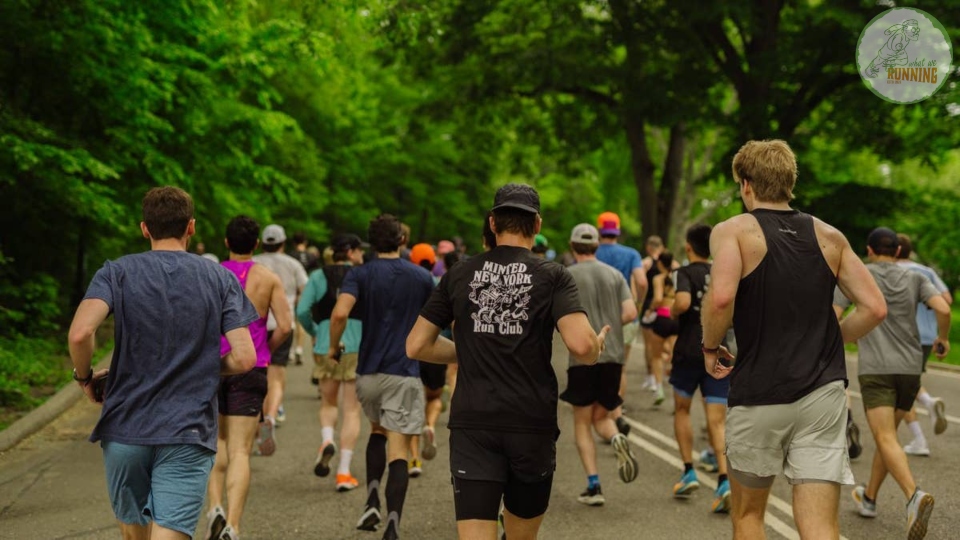
Running has always been thought of as a solitary activity.
You put on your headphones.
You start your watch.
You run.
But increasingly, runners are doing something very different.
They’re meeting strangers at cafes, parks and train stations before setting off together. They’re joining local groups, travelling across cities to attend popular events and, increasingly, making genuine connections through running.
And suddenly, run clubs are absolutely everywhere.
From informal groups of friends to huge social running communities, the traditional image of the lone runner is being upended by something far more communal.
But why?
Join us at What We Running as we explore what run clubs actually are, why they’ve become so popular, how social media has helped fuel their growth and why they’re proving especially appealing to younger runners. We’ll also explore whether run clubs are genuinely helpful for beginners – or just the latest fitness fad.
Because if running has always been an individual pursuit, why has one of the most solitary sports suddenly become so social?
What Is A Run Club?
A run club is a group of people who regularly meet to run together, typically around a particular location, pace, distance, or community. Unlike running alone, a run club turns the simple act of heading out for a few kilometres into a shared experience.
However, there’s no universal rule on what a run club needs to look like.
Some are traditional athletics clubs with organised training sessions and race teams. Others are little more than groups of friends meeting at the same cafe each Wednesday evening. You may find beginner-friendly social runs, competitive running groups, workplace clubs, or even run clubs organised around particular brands and communities.
The modern run club has therefore become a fairly large umbrella term. What they tend to have in common is the same basic idea: show up, run together and become part of a community.
Run Clubs vs Traditional Running Clubs
So, what’s different about a run club compared to a traditional running club?
Traditional running clubs typically have a more formal structure. They may offer coaches, organised training sessions, different ability groups, club membership, and opportunities to compete in events.
Modern social run clubs are usually a bit more relaxed. There may be no membership requirement, no coach and no expectation that you’re training for a particular race. The emphasis is usually around socialising, meeting people and enjoying running together.
In other words, a running club might help you become a better runner. A social run group may simply help you enjoy being a runner.

Why Are Run Clubs So Popular?
Run clubs are becoming increasingly popular because they offer something that running on your own often can’t: community.
Running is an incredibly accessible form of exercise. You don’t need a gym membership or any expensive gear to get going, and you’re free to head out whenever you want. But that simplicity can also make it a solitary pursuit.
Run clubs change that.
They Make Running More Social
For many people, a run club is as much about the conversation before and after the run as the kilometres themselves. Running gives people a shared activity and an easy reason to meet up, even if they’ve never met before.
A 5k run followed by a coffee can soon become a treasured weekly social ritual.
They Make It Easier to Stay Motivated
It’s far easier to skip a solo run when no one knows you’ve decided not to go.
A run club helps create a little bit of accountability. There are people waiting on you, a scheduled time to turn up and the knowledge that you’ll probably regret missing it once everyone begins sharing their runs afterwards.
They Help People Make Friends
Run clubs have also become an increasingly popular way to meet people, especially for younger adults and those who have just moved someplace new.
Rather than relying on awkward introductions, you’re immediately given the chance to do something together. You run, talk, grab a coffee, and steadily get to know each other.
Check Out Our Guide On Why Gen Z Loves Running
They Make Running Less Intimidating
Running can feel surprisingly intimidating when you first start out. Joining a group can remove some of that anxiety, especially when a club offers different paces and distances.
You’re no longer the person struggling to keep up with everyone else. You’re simply one runner among many.
They Give Running a Sense of Belonging
Perhaps most importantly, run clubs can turn running from something you do into something you’re a part of.
And in a world where many people are looking for genuine connection, that sense of belonging may just be the biggest contributor to why run clubs have become so popular.
The Rise Of Social Running
The growth of run clubs is part of a bigger change in the way people think about running. It isn’t just an activity you squeeze into your evening after work or an individual battle against the clock. Increasingly, running has become a social experience in its own right.
Look at the modern run club, and you’ll find plenty of things that happen before and after the actual running. Cafe meet-ups, post-run coffees, social events, group challenges, and running festivals have all become part and parcel of the experience. Some clubs are even built around particular brands, neighbourhoods or online communities.
Social media has helped accelerate this shift. Instagram makes it easy to discover local running groups, while Strava allows runners to connect, compare activities, and encourage each other long after the run has finished. TikTok has taken things even further, helping turn running into something that can be shared as a lifestyle rather than just an exercise routine.
There’s an important distinction here, though.
Running hasn’t necessarily become less serious. It’s become more social.
The same runner who turns up to a run club for the conversation and coffee may still spend the rest of the week following a structured training plan, obsessing over their splits and chasing a new PB.
That’s maybe what makes the modern run club so appealing. You don’t have to decide between running to improve and running for fun.
You can chase your fastest 5k while also making friends along the way.
How Social Media Helped Create The Run Club Boom
If run clubs have become more visible in recent years, social media deserves some of the credit. Platforms like Instagram, TikTok, and Strava have helped upend running from something you do into something you’re able to share, discover, and construct a community around.
Instagram Made Running Look Social
Instagram is full of images of groups running together, grabbing a coffee afterwards and turning up in matching outfits. That may sound superficial, but it has helped warp the perception of what running can look like.
Rather than seeing running as a lonely pursuit, potential runners are able to see a whole community waiting for them.
TikTok Turned Running Into a Lifestyle
TikTok has taken this even further. Running content isn’t just about training plans and race results anymore. It’s about friendships, races, running outfits, cafes, travel, dating and lifestyle.
For some younger runners, discovering a run club online can be the first step towards actually joining one in person.
Check Out Our Guide On Why TikTok Running Content Is Everywhere
Strava Made Running More Community-Based
Strava has also blurred the lines between running alone and running together. You may complete a 5k run by yourself, but then see your friends’ activities, give someone a kudos and compare your efforts afterwards.
In that sense, social media has conjured an interesting shift: people increasingly discover running communities online before becoming part of them offline.
The run club boom isn’t totally a product of social media, but it’s certainly helped give the movement some serious momentum.
Why Are Younger People Joining Run Clubs?
Part of the appeal of the modern run club is that it presents something many young people are looking for: a way to meet other people without the pressure of traditional socialising.
They’re a Way to Meet People Without Going to a Bar
Meeting new people as an adult isn’t always straightforward. Pubs, clubs, and dating apps all have a role to play, but they’re not always for everyone.
A run club presents an alternative. You can turn up on your own, join a group of strangers, and instantly know you have something in common. There isn’t any awkward standing around wondering what to say because you’ve already got a 5k run to share.
They Offer a Shared Activity
That’s perhaps the secret to their appeal. You’re not just meeting people to meet people. You’re all doing something together.
The run provides a natural launchpad for conversations, while the coffee or social gathering afterwards lends everyone the chance to get to know each other properly.
They’re Good for People New to a City
Run clubs can be especially valuable for anyone who has recently moved somewhere new. Instead of trying to build a completely new social circle from scratch, a weekly run provides ready-made community.
They’re Social Without Being Entirely About Drinking
There’s also something refreshing about a social activity that doesn’t depend entirely on alcohol.
That doesn’t mean young people have suddenly given up on the pub. It simply means running has become another way to socialise – one where making friends, getting some exercise and having a good time can all happen at once.
And maybe that’s why the modern run club feels less like a running session and more like a community you happen to run with.
Check Out Why Running Is Replacing Nightlife For Some People
Are Run Clubs Good For Beginners?
Yes – but it all depends on the club.
For someone new to running, joining a group can be a brilliant way to build confidence, stay motivated, and meet other runners. But not every run club is tailored with beginners in mind. Some are focused on speed, distance, or race training, which can make a new runner feel like they’ve stumbled upon the wrong session.
If you’re considering joining a beginner run club, look for a few things first.
Different Pace Groups
A good club should cater for different abilities rather than expecting everyone to run at the same pace. Having a slower group can be a huge difference-maker if you’re concerned about being left behind.
Shorter Distances
Beginners shouldn’t feel pressured to run 10k just because everyone else is. Clubs offering shorter routes or the option to turn back early can be so much more welcoming.
A Friendly, No-Pressure Atmosphere
Find groups that explicitly claim to be social, inclusive, or beginner-friendly. The whole point should be to enjoy running together, instead of demonstrating who’s the quickest.
Clear Information Before You Attend
A good run club should tell you where to meet, how far you’ll run, what pace to expect, and whether you need to sign up beforehand. Knowing what you’re walking into can take away much of the anxiety of turning up for the first time.
And there’s the question almost all of us have when we first begin running:
“What if everyone is so much faster than me?”
The right running club won’t make that matter.
You don’t need to be fast to join a running club. You just need to find one that matches your current ability – and remember that everyone in the group was once a newcomer too.
Benefits Of Joining A Run Club
There are plenty of good reasons to join a run club, and they go well beyond simply having someone to run alongside. For many people, the biggest benefit is that running becomes easier to stick with when you’re part of a community.
Here are some of the biggest benefits of joining a run club.
1. Motivation
It’s easier to find the motivation to run when you know other people are waiting for you. A regular group run can become a fixture in your week, even on those troublesome days you’d rather stay home.
2. Accountability
Knowing that you’ve committed to meeting a group can provide an extra push to get out the door. You may skip a solo run, but you’re less likely to leave your friends waiting.
3. Making Friends
Run clubs provide a natural way to meet people with a shared interest. Conversations that begin with running can quickly transform into genuine friendships.
4. Discovering New Routes
Running with a local group can introduce you to routes, parks, and trails you may have never found on your own. It can make exploring your local area a part of the fun.
5. Improving Your Running
Running alongside other people with varying abilities can also help you improve. You can pick up training plans, learn from experienced runners, and steadily improve your base fitness level when running further or faster.
6. Feeling Part of a Community
Arguably the biggest benefit of run clubs is simply belonging somewhere. You’re no longer just someone who runs; you’re part of a group of people who understand why you enjoy it.
7. Having More Fun
And ultimately, running should be enjoyable. The conversation, post-run coffee, odd race and shared experiences can make setting out for a run feel like something to look forward to, rather than another item on your to-do list.
Are Run Clubs Replacing Traditional Running Clubs?
With the blossoming of social run clubs, you may wonder whether traditional running clubs are becoming things of the past.
Not necessarily.
Traditional running clubs still bring with them things that many social run clubs don’t. Structured training, coaching, track sessions, and organised competitions are all invaluable to runners looking to improve their performance. Many also have race teams, club championships, and established communities built around competitive running.
Social run clubs tend to come with a different goal.
Their emphasis is usually on community, accessibility, friendships and having fun rather than hitting a particular time or prepping for a specific event. You may turn up without knowing anyone, run a few kilometres and finish the evening with a coffee or something stronger.
That doesn’t mean the two approaches need to compete.
In fact, they can complement each other rather well. A runner may join a social run club to meet people and discover new routes, while also attending a traditional club’s interval session to build their speed.
Ultimately, there’s space for both.
One is mainly about becoming a better runner. The other is all about enjoying being a runner with other people. And there’s no reason why you can’t want both.
Downsides Of Run Clubs
For all the undeniable benefits of run clubs, they’re not perfect. And while the best ones can be hugely welcoming, not every running community will be the right fit for every runner.
They Can Feel Cliquey
Some groups can develop their own friendships and inside jokes, making newcomers feel like they’re interrupting an established social circle. You’re not guaranteed a welcoming atmosphere just because a club describes itself as social.
Some Are Too Focused on Pace
A “social run” isn’t necessarily social if everyone’s five minutes up the road from you. Groups that don’t offer different pace options can leave slower runners feeling isolated rather than included.
They Can Turn Running Into Another Performance Metric
There’s also a risk that the social side of running becomes another source of pressure. Pace, mileage, PBs and Strava achievements can make a supposedly relaxed run feel surprisingly competitive.
Some Run Clubs Are More Lifestyle Brand Than Community
With the growth of branded run clubs, there’s a legitimate question about whether some are selling lifestyle as much as fostering a community. Matching kits and post-run coffees are fun, but that’s not what makes a running community truly meaningful.
You May Just Prefer Running Alone
And that’s totally fine.
You don’t need to join a run club to be a runner. Some people genuinely love the solitude, freedom and headspace that comes with solo running. The rise of social running shouldn’t make running alone feel like it’s somehow being done wrong.
Are Run Clubs Just A Trend?
With their carefully curated Instagram stories, post-run coffees and branded running gear, it’s easy to wonder whether run clubs are just the latest fitness fad.
And maybe some of the aesthetic is.
The cafe catch-ups, matching outfits, Instagram reels and increasingly polished branded clubs may eventually feel as dated as any other social media trend. What’s fashionable about running can, and certainly has, changed.
But the underlying appeal of run clubs is unlikely to vanish.
People have always wanted community, friendship, accountability, belonging and shared experiences. Running just provides an especially accessible way of finding all five.
That’s maybe why the rise of run clubs feels very different from a passing fitness fad. The idea of meeting other people to run together isn’t new. What’s changed is the way we’ve packaged and promoted it.
Social media has made these communities more visible, whereas modern run clubs have made them more accessible and social.
The cafe may change. The matching T-shirts might disappear.
But the basic notion of running with other people and feeling like you belong somewhere probably isn’t going anywhere.
Wrap Up
There’s nothing wrong with running alone.
Sometimes, that is precisely what you need. A pair of headphones, an empty road, and an hour to yourself can be one of the best parts of running.
But there’s something uniquely special about finishing a tricky run and having someone beside you who knows precisely how it felt.
Perhaps that’s why run clubs have taken off.
They aren’t just making running more social. They’re giving people a reason to get out the door, helping newcomers feel less intimidated and creating communities where friendships can develop over a few miles and a post-run coffee.
And maybe that’s the most interesting part of the run club boom. Running has always been about putting one foot in front of the other. But increasingly, people are discovering that you don’t need to do it solo.
You can chase a PB and make friends.
You can train hard and have a laugh.
You can come for fitness, competition, friendship, or just because you like being part of something.
Because sometimes, the best part of running isn’t the running at all.
Check Out Our Guide On How To Rediscover Your Love For Running

Loves Parkrun. Hates running uphill. After investing in his first pair of proper running shoes, James was inspired to found What We Running in 2026 with the aim of sharing his favourite tips, tricks, and motivational hacks needed to sustain a running journey.