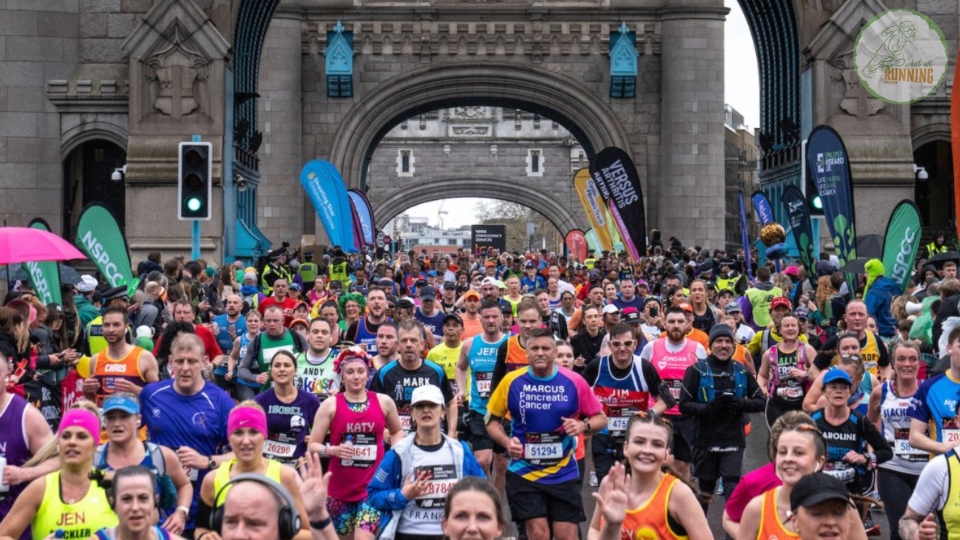
For most of us, the first marathon has a fairly straightforward aim: just finish it.
You spend months training, survive the taper, make it through the inevitable wall, and eventually reach the finish line with a medal around your neck. Job done.
Except sometimes, it isn’t.
One marathon becomes two. Then five. Then ten. Before long, you’re browsing race calendars rather than holiday destinations, comparing medal designs, planning weekends around starting lines, and wondering how many different cities you can run through.
Welcome to the world of the Marathon Collector.
There is no official qualification for becoming one, and you definitely don’t need a particular number of marathons on your CV. It’s just our handy way of describing runners who become hooked on the idea of collecting races, medals, cities, countries, courses, and experience.
But what makes marathon collecting so appealing? And when does running marathons stop being about the distance and start becoming about the collection?
What Is A Marathon Collector?
A Marathon Collector is a runner who deliberately looks out for different marathons to build a personal collection of races, medals, destinations, achievements, or experiences. There’s no official qualification or number of races required to earn this tag. It’s more of a mindset than a title.
For some runners, the collection is just about the number of marathons they’ve finished. For others, the challenge is far more specific. They may want to run famous city marathons, collect medals from different countries, or tick unusual courses off their running bucket list.
Collecting Marathons
The simplest form of marathon collecting is chasing the number. Each completed marathon adds another race to the tally, creating a long-term goal that can continue long after the first marathon is done and dusted.
Collecting Medals
For some runners, the races themselves are just part of the appeal. A unique marathon medal can become a physical souvenir of the experience, especially when races offer unique designs, special editions, or medals that form part of a larger series.
Collecting Cities and Countries
A marathon can also be the excuse you need to explore somewhere new. Running through a different city or travelling abroad for a race turns marathon collecting into a blend of running and tourism.
Collecting Achievements
Others collect challenges rather than just races. That might mean completing major marathons, especially tough courses, trail or night marathons, island races, or even achieving specific age-group milestones.
Ultimately, there is no single way to be a Marathon Collector. The collection is whatever keeps you looking for the next starting line.
When Does A Runner Become A Marathon Collector?
So, how many marathons do you actually need to run before you can call yourself a Marathon Collector?
Five? Ten? Twenty?
Maybe it’s the runner who signs up for the same marathon every year. Or perhaps it’s the person who books a flight specifically because there’s a marathon happening in a city they’ve never visited before.
The reality is that there is no magic number.
A runner could complete 30 marathons around their local area without ever thinking of themselves as a collector. Another runner may finish three very distinctive international races and already feel like they’ve begun building a collection.
The difference is really in the intent.
A marathon runner might simply want to finish races, improve their times, or enjoy the challenge. A Marathon Collector starts thinking about what they haven’t done yet. They’ve only run one city, so they want another. They’ve picked up medals from three countries, so why not look for a fourth? They’ve conquered a flat road marathon and now fancy something mountainous.
At some point, the question shifts from “How many marathons have I run?” to “What marathon should I collect next?”
And that’s probably when you know you’ve become a Marathon Collector.
6 Different Types Of Marathon Collectors
Not every Marathon Collector is collecting the same thing. For one runner, the aim may be a wall littered with race medals. For another, it might be ticking off as many countries as possible. Someone else may want to experience as many different types of marathons as they can.
In other words, marathon collecting can take several different forms.
The Medal Collector
This is the Marathon Collector who loves a bit of bling.
The race medal isn’t just proof that they’ve finished; it’s part of the appeal. They’re drawn to the unique designs, special editions, challenge medals, and race series where every event adds another piece to the collection.
The more unusual the medal, the better.
For these runners, completing a marathon can feel like adding another trophy to the cabinet. And unlike a race time, a medal is something they can physically keep, display, and look back on years later.
The City Collector
For the City Collector, every marathon is an opportunity to visit someplace new.
London. Paris. Berlin. Madrid. Tokyo. New York.
The marathon becomes part of the travel itinerary rather than the whole reason for the trip. They may spend Friday exploring the city, run 26.2 miles on Sunday morning, and then spend the afternoon celebrating with a huge meal.
It’s an especially appealing way of combining two hobbies: running and travelling.
The list of potential races is practically endless too. Once you’ve run one city marathon, there is always another one waiting to be explored.
The Country Collector
The Country Collector takes the idea one step further.
Rather than asking “How many marathons have I run?”, they’re asking:
“How many countries can I run a marathon in?”
Suddenly, marathon training becomes a passport-stamping exercise.
A race in Spain may lead to one in France, Italy, England, or somewhere even further afield. Each marathon offers a different course, culture, climate, and experience, turning the collection into something that grows alongside the runner’s travel history.
For some, the ultimate aim may be to finish a marathon in every continent.
The Big-Race Collector
Some runners aren’t interested in running just any old marathon. They want the big ones.
They’re chasing famous courses, prestigious events, and races that carry a certain status within the running world.
The obvious example is the Abbott World Marathon Majors: Boston, London, Berlin, Chicago, New York City, and Tokyo. Completing a full collection is a bucket-list achievement for many marathon runners, with the Six Star Medal providing the ultimate bit of bling for those who are able to achieve it.
For this type of collector, the name on the start line matters almost as much as the distance.
The Distance Collector
Not every collector is interested in destinations or medals. Some are interested in the numbers on the distance marker.
For these runners, the marathon may just be the start:
26.2 miles → 50k → 50 miles → 100k → 100 miles.
This is where marathon collecting begins to overlap with ultramarathon culture. The appeal stems from continually pushing the boundaries of what the body can do and adding progressively bigger endurance challenges to the list.
They aren’t necessarily collecting marathons anymore, but they’re still operating with that same collector’s mentality: I’ve done that. What’s next?
The Experience Collector
Maybe the most interesting Marathon Collector isn’t really collecting races at all.
They’re collecting stories.
A marathon through a national park. A race in another country. A brutally hilly course. A marathon shared with friends. A race where the weather was terrible, the legs gave up at mile 20, and just about everything that could go wrong did.
Years on, they may not remember their finishing time.
They’ll remember the sunrise, the crowd, the person they met at the start line, the marshal on the finish line, or the outrageous meal afterwards.
And maybe that’s the most rewarding type of marathon collector: not a list of races, but a lifetime of experiences tied to them.
Why Do People Become Marathon Collectors?
There is something strangely satisfying about collecting things. We like seeing a list grow, ticking boxes and having a goal that feels just that little bit bigger than the one before it. Marathon collecting taps into all of those instincts, but with a far sweatier reward at the end of it.
The Satisfaction of Completing a Collection
For some runners, having a list of races to complete provides a sense of progress that a single finishing time just can’t scratch. Every marathon adds another tick, another medal, and another achievement to this collection.
It turns running into a long-term project, rather than something that ends when you hit a PB.
It Gives Running a New Goal
After chasing personal bests for years, some runners eventually want a different sort of challenge.
The question evolves from:
“How fast can I run?”
to:
“Where can I run next?”
A marathon collection provides a near-endless supply of new goals.
Marathons Become Travel Experiences
A marathon can also provide a reason to visit somewhere you’ve never been before. Instead of just sightseeing, you’re experiencing a city on foot, surrounded by thousands of other runners and local supporters.
The Social Side
There’s a community tethered to marathon collecting, too. Races bring together runners with the same strange willingness to spend months training for a few hours of suffering. Collectors can swap stories, compare races, and unearth their next event through running clubs and online communities.
Every Race Has a Story
Maybe the biggest reason people keep collecting.
A collection of marathons is really a collection of memories.
The medal may hang on the wall, but the real collection is everything you remember about earning it.
Check Out Our Guide On How Running Becomes Part Of Your Identity
The Appeal Of Collecting Marathon Medals
There’s something especially satisfying about a marathon medal collection. Maybe it’s the variety: the different shapes, sizes, colours, and designs, each one carrying the branding and personality of the race that awarded it.
Some medals are simple and understated. Others are enormous, elaborate, or part of a series, with runners needing to complete multiple races to collect the full set. Destination marathons can make their medals especially meaningful, turning them into souvenirs from a particular city, country, or adventure.
And then there’s the simple satisfaction of seeing the collection grow.
Displaying marathon medals at home can be a visual record of a runner’s journey. Each one represents 26.2 miles, months of training, and everything that happened between the start line and the finish.
That’s why collecting marathon medals isn’t necessarily about the medal itself.
It’s about having something physical to remind you of that experience.
Check Out Our Guide On Why Everyone Is Suddenly Running Marathons
The World Marathon Majors And The Ultimate Marathon Collection
For many Marathon Collectors, there is one collection that sits above the rest: the Abbott World Marathon Majors.
The series brings together six of the world’s most famous marathons: Boston, London, Berlin, Chicago, New York City, and Tokyo. Each race offers its own history, atmosphere, and famously difficult entry process, making completing all six a huge achievement in its own right.
For runners who manage to complete the full set, there’s an additional prize: the Six Star Medal.
It is arguably the defining symbol of marathon collecting. Six races, six cities, and thousands of miles of training, travel, and racing condensed into one medal.
Of course, you don’t need to chase the World Marathon Majors to be a Marathon Collector. But if you’re looking for the ultimate marathon bucket list, ticking off all six is as close as the running world gets to completing the collection.
Is Marathon Collecting Expensive?
It can be.
The cost of marathon collecting depends heavily on what you’re actually collecting. A runner entering local races throughout the year will have a totally different budget compared to someone jetting off around the world in search of famous marathon medals.
Every race can involve more than just an entry fee. There may be travel, accommodation, food, and local transport to think about, along with your running kit, training costs, and recovery. If you’re travelling overseas, these costs can soon stack up.
The Local Marathon Collector
Keeping things close to home is the most affordable way to build a marathon collection. You may only need to pay for the race entry and transport, especially if you can travel to and from the event on the same day.
The International Marathon Collector
Things get markedly more expensive when your collection takes you overseas. Flights, hotels, and several days of food and transport can cost many times more than the race entry itself.
That’s not necessarily a bad thing. For many runners, the travel is part of the appeal.
Ultimately, marathon collecting doesn’t need to mean spending thousands every year. Your collection can be ambitious – or as local as your budget permits.
The Downsides Of Becoming A Marathon Collector
For all the excitement of finding the next race, marathon collecting isn’t without a few downsides. The same urge to keep adding another race to the calendar can sometimes turn something enjoyable into a source of pressure.
The Physical Cost
Marathons are demanding. Even experienced runners need time to recover, and trying to squeeze too many runs into a year can make it tricky to train properly or give your body enough time between efforts.
The Financial Cost
Race entries, travel, accommodation, and kit can add up surprisingly quickly. The more ambitious your collection becomes, the more expensive it can be to maintain.
The Pressure to Keep Collecting
A hobby can become an obligation. Once you’ve begun building a collection, it can be tempting to keep on chasing the next race just because it’s there.
Chasing Numbers Rather Than Enjoyment
There’s also a danger of becoming more invested in the tally than the experience.
“I’ve run 20 marathons” sounds impressive. But it doesn’t necessarily mean those 20 races were enjoyable.
The best collections aren’t always the biggest ones.
The Environmental Cost
For international collectors, frequent flights and long-distance travel also come with an environmental cost. It’s worth keeping in mind whether every race needs to involve a flight across the world.
Ultimately, marathon collecting should be adding something to your running journey – not becoming the reason you stop enjoying it.
How To Start Your Own Marathon Collection
If the idea of collecting marathons sounds appealing, you don’t need to book six international races immediately. The easiest way to begin is to choose what you actually want your collection to represent.
1. Choose What You’re Collecting
Do you want to collect medals, cities, countries, famous races, unusual courses, or simply memorable experiences? There’s no right answer here, and you can always shift your focus as you go.
2. Set a Long-Term Goal
Give yourself something to build towards. That might be completing five different marathons, running in ten cities, visiting five countries, running a marathon in every UK nation, or completing a particular race series.
3. Create a Marathon Bucket List
A simple spreadsheet can make the collection surprisingly satisfying to track. Try recording the race, location, date, distance, finishing time, medal and favourite memory from every event.
4. Don’t Ignore the Logistics
Before adding a race to your list, check entry deadlines, ballot dates, travel and accommodation costs. More importantly, consider where it fits into your training and recovery. A great marathon isn’t much use if you’ve scheduled it three weeks after another one.
5. Leave Room for Spontaneity
Finally, don’t over-plan it.
Not every marathon needs to be part of a carefully constructed collection. Sometimes you’ll hear about a race, think “That sounds fun”, and sign up.
That counts too.
Marathon Collector Vs Marathon Runner – What’s The Difference?
So, is a Marathon Collector really any different from a regular marathon runner?
Not necessarily.
The distinction is less about how many marathons you run and more about what motivates you to choose the next one.
| Marathon Runner | Marathon Collector |
| May focus on performance | May focus on experiences |
| Chases PBs | Chases new races |
| Often repeats favourite races | Often seeks variety |
| Training is central | Travel or adventure may be central |
| Measures progress through times | Measures progress through races |
But these aren’t mutually exclusive categories.
A runner can be obsessed with improving their marathon time while also collecting races around the world. They may spend six months chasing a sub-3 marathon, then enter a slower destination race just because they’ve always had it down on their bucket list.
You could even be trying to complete the World Marathon Majors while chasing a personal best at every opportunity.
Ultimately, a Marathon Collector is simply someone who finds another reason to keep on looking for the next start line.
You don’t need to choose between running faster and running somewhere new.
Wrap Up
Perhaps being a Marathon Collector isn’t really to do with having 50 medals hanging around your house.
Maybe it’s just about looking at a race you’ve never run, somewhere you’ve never been, and thinking:
I’d quite like to see what that’s like.
Because running doesn’t always need to be about chasing a faster time. Sometimes, the motivation is finding a new course, exploring a new city, meeting new people, or giving yourself another crazy challenge to run for.
You might be collecting medals.
You might be collecting cities.
You might be collecting countries, courses, friends, or stories.
And that’s what makes marathon collecting so much fun. Every race gives you something new to add to the collection, but the thing you’re really building is a catalogue of experiences.
So if you’ve found yourself scrolling through marathon calendars wondering where you could run next, perhaps there’s a simpler explanation.
Maybe you’re a Marathon Collector after all.
Check Out Our Guide On Why Runners Enter Races They Swear They Hate

Loves Parkrun. Hates running uphill. After investing in his first pair of proper running shoes, James was inspired to found What We Running in 2026 with the aim of sharing his favourite tips, tricks, and motivational hacks needed to sustain a running journey.