

As runners, we all know the feeling.
You stumble over the finish line swearing you’re close to death. Your legs ache, your feet are blistered, your lungs are on fire, and somewhere between accepting your medal and collapsing onto the nearest patch of grass, you make a promise:
“Never again.”
You’ve had your fill of the early alarms, the pre-race jitters, the relentless training plans, and the uncomfortable final kilometres. Next weekend, you’re having a lie-in.
And yet, somehow, mere days on, you’re scrolling through the race calendars, comparing entry fees, and wondering whether you could squeeze just one more event into your schedule.
It’s a bizarre contradiction. Why do we willingly spend money, sacrifice weekends, wake up before sunrise, and put ourselves through an hour – or several hours – of discomfort for something we so often swear we hate?
The answer is that we probably don’t hate racing at all. We hate the nerves beforehand, the doubts during the toughest kilometres, and the pain that comes when we are pushed to our limits. But the experience as a whole presents something way more powerful than those tricky periods, and that’s why, no matter how many times we swear we’re done, we keep coming back.
Every Runner Says “Never Again”
There comes a time in almost any race where runners question every choice that led them there.
Why did I sign up for this?
Why did I think it was a good idea?
Why am I paying to make myself suffer?
It typically happens somewhere in the hardest part of the race. Your legs feel weak, your breathing uncontrolled, and the finish line somehow seems to be getting further away. In that moment, quitting running completely can feel like a very enticing option.
Then you cross the finish line.
The pain doesn’t evaporate immediately, but it changes. Exhaustion becomes relief. Frustration becomes pride. The miles you sank are replaced by the memory of the moment you finished, the support from the crowd and the feeling that you completed something tricky.
Of course, if you’ve given running a good go, you’ll be aware of what’s been dubbed post-run amnesia. The same person who swore they would never race again is suddenly looking back at their results, checking photos, and browsing the next upcoming event.
This selective memory is part of what keeps us all coming back. We remember the excitement, the atmosphere, and the sense of achievement far more clearly than the hardships in the middle. The suffering fades, but the feeling of finishing stays.
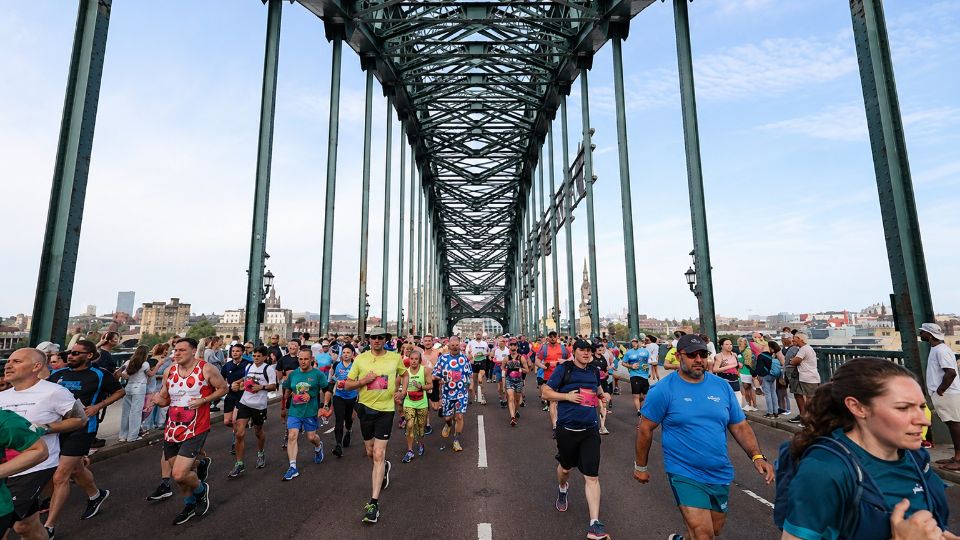
We Don’t Hate The Race – We Hate Parts Of It
The funny thing about racing is that most runners actually don’t hate the race itself. What they hate are the individual moments that make up the experience.
The Early Alarm
It starts long before the race even begins.
The alarm goes off at a time when most reasonable people are still asleep. It’s cold outside, your kit is laid out, and suddenly the comfort of staying in bed feels far more appealing than running several kilometres with hundreds or even thousands of strangers.
Then there is the journey: finding parking, waiting in queues, and standing around wondering whether you have all you need. The nerves begin building before you’ve even found the start line.
The Middle Miles
This is where the real battle starts.
Your pace feels harder than you expected. Your legs feel heavy. The voice in your head begins asking whether you went out too fast and whether this was all just a terrible idea.
For a few moments, all of us runners are prone to question our choices.
The Final Stretches
By the end, everything is hurting.
Your body wants to slow down, but the finish line is close enough to chase. Those final metres can feel like the longest of the whole event.
And then something happens.
You cross the line, stop your watch, and feel the wave of achievement that makes all those difficult moments seem worth it. Somehow, the finish line has a way of rewriting everything that came before it.
Suffering Makes Achievement Feel More Meaningful
There is a reason we often value the things that are hardest to achieve. The struggle itself becomes part of the story.
Think about climbing a mountain, completing a tricky hike, or finally understanding a language you’ve been learning for months. The end result is rewarding, sure, but the journey is what gives the achievement meaning. If something came easily, it may feel satisfying – but it probably wouldn’t feel quite as memorable.
Running works in precisely the same way.
A race where everything goes swimmingly is a great experience, but it is usually the tougher races that stay with us the longest. The ones where we had to push through tired legs, uncomfortable weather, doubts and moments where we weren’t sure whether we could or should carry on.
The suffering becomes tied ot the achievement.
That doesn’t mean runners enjoy every painful moment. No one loves the feeling of struggling through the final kilometre or wrestling with their own thoughts when a race gets tough. But overcoming those moments creates a sense of pride that simply turning up and cruising to the finish line cannot provide.
The discomfort gives the result weight. It proves that the medal, the finishing time or the personal milestone wasn’t handed to us – it was earned.
And perhaps that’s why runners continue signing up for difficult races. We’re not chasing the pain itself. We’re chasing the feeling that comes knowing we were strong enough to overcome it.
Races Give Our Training A Purpose
One of the biggest reasons runners keep signing up for races is that an event gives every training run a purpose.
Without a goal on the horizon, it’s surprisingly easy to lose motivation. A run can become something you do when you have time, instead of something you prioritise. Bad weather, hectic schedules, and tired legs suddenly become a far better excuse to skip a session.
A race changes all of that.
Once you’ve got an event in your diary, your training has direction. There is a countdown, a target, and a reason behind every early morning run or difficult workout. Even the sessions you don’t enjoy as much begin to feel meaningful because they are geared toward something.
Races also create accountability. Knowing that you have committed to showing up on a certain day changes how you approach your training. You’re no longer just running – you’re preparing.
The excitement builds too. Checking the date, planning your route to the event and imagining yourself crossing the finish line all become part of the experience.
Ultimately, races give structure to our running. They transform individual miles into a journey, transforming random workouts into progress towards a goal. And sometimes, having something to chase is precisely what keeps us pushing forward.
We Chase Versions Of Ourselves
Most runners don’t sign up for races just because they’re looking for another medal to stick in their collection. The medal is nice, but it’s rarely the reason we find ourselves returning to the track.
What we are often chasing is a different version of ourselves.
For some of us, that means chasing a PB and proving that all those training hours have made a difference. For others, it may be about building confidence, becoming more consistent, or showing themselves that they can do something they once thought impossible.
A race becomes more than just another run. It becomes a marker of change.
The person standing on the start line is usually different from the person who first chose to start running. Maybe they’ve become a bit fitter, more disciplined, or more resilient. Perhaps running has helped them through a tough period or given them a sense of belonging they never had before.
This is why finishing a race can feel so emotional. We’re not just celebrating a time on a watch – we are celebrating the journey that got us there.
The real achievement isn’t always the pace or distance, or position. Sometimes, it is the simple realisation that you have become someone who runs, sets goals, and keeps showing up even when things get tough.
Shared Suffering Creates Community
One of the most unexpected aspects about racing is how the hardest moments often become the ones that bring people together.
Everyone on the start line has their own reason for being there, but for a few minutes – or several hours – thousands of runners share the same experience. Everyone can empathise with the nerves, the discomfort, and the battle of trying to keep moving when things get tough.
That shared struggle creates a unique sense of community.
It is found in hearing a stranger shouting encouragement as you run past, the volunteers standing outside in the cold to hand out water or direct runners, and the people cheering on even though they have no idea who you are. Everyone is there to help each other over the finish line.
You see the same thing at smaller events such as parkrun, where the running is only a part of the experience. The conversations before the start, the support during the route, and the chats afterwards all evoke a feeling of belonging.
Humans have always bonded through difficult experiences. Running races are no longer different. We may arrive as strangers, but sharing those challenging miles creates connections that often last well beyond the finishing line.
Pain Fades Faster Than Pride
One of the reasons runners keep coming back is that our memories are surprisingly selective. The difficult moments of a race feel overwhelming at the time, but they rarely stick with us in the same way as the positive ones.
A few days on from finishing, we don’t spend much time thinking about the cramped calves, the stitch that showed up halfway through, or the moment we questioned whether we could keep going. We forget the rain, the aching feet, and the discomfort that felt impossible in the moment.
Instead, we remember the things that made the experience special.
We remember the medal around our neck, the finish line photo, the encouragement from supporters, and the feeling of stopping our watches knowing we’ve finished something difficult.
The pain is temporary, but the pride lasts far longer.
This is why runners can look back at a tough race with a smile and begin thinking about the next challenge in the calendar. The suffering becomes just a small footnote of a far bigger memory – the story of what we achieved, and how we felt when we crossed that finish line.
Check Out Our Guide On Why Everyone Is Running Marathons Now
Maybe We Don’t Actually Hate Racing
After everything we have put ourselves through, it is easy to understand why runners claim they hate racing. The early mornings, the nerves before the start, and the pain of pushing our bodies beyond their comfort zones can all feel overwhelming.
But maybe we don’t actually hate racing.
Perhaps we hate the uncertainty.
We hate wondering whether we have trained well enough, whether we will hit our target pace, or whether things will all go wrong on the day. We hate the nerves that build before the starting gun and the discomfort that arrives when the race becomes tougher than we expected.
Yet those moments are just part of the experience.
What we really love is everything that comes afterwards. We love the growth that comes from challenging ourselves, the achievement of hitting a goal, and the community that surrounds us. We love creating stories that we can look back on and, perhaps most crucially, proving ourselves wrong.
Each race teaches us something. Sometimes it shows how far we’ve come. Sometimes it reveals that we are capable of far more than we assumed.
There is a huge gulf between hating something because it is difficult, and hating the experience itself. Runners keep showing up because, despite the struggles, racing gives us something we can’t ever find by sticking to our comfort zones.
Why Signing Up Is The Hardest Part
Sometimes, the hardest part of a race isn’t the kilometres, training, or even making it to the actual finish line.
It’s pressing the button to enter.
Signing up for a race means making a commitment. It turns an idea into something real. Suddenly, there is a date in the calendar, a goal to work towards, and the possibility that things may not go exactly as planned.
That can be hugely intimidating.
Entering a new race means accepting the possibility of failure. Perhaps you won’t achieve the time you wanted. Maybe the training won’t go perfectly. Or you’ll learn that the challenge is tougher than you expected.
But that is also what makes it all worthwhile.
Without committing, there is no challenge to overcome, and no opportunity to surprise yourself. The moment you sign up is the moment you choose that the goal matters enough to pursue.
The fear of racing is usually a sign that it means something. And sometimes, the biggest wins start with the simple decision to show up.
Wrap Up
Every race asks us the same question:
How much discomfort are you willing to endure for a moment you’ll remember for years to come?
The answer is different for everyone taking part. For some, it is chasing a new PB. For others, it is proving that they can complete a distance they once thought was impossible. Sometimes, it is simply about showing up and becoming a part of something bigger.
This is why we keep signing up.
Not because we enjoy every mile.
Not because we love the pain.
Not because every race goes precisely as planned.
We keep coming back because races give us something beyond the finish line. They give us purpose, community, and the chance to discover what we are capable of.
Somewhere between the starting line and the final step, we become someone we weren’t before.
And that is a feeling worth pursuing.
Check Out Our Guide On Why Running Is So Addictive

Loves Parkrun. Hates running uphill. After investing in his first pair of proper running shoes, James was inspired to found What We Running in 2026 with the aim of sharing his favourite tips, tricks, and motivational hacks needed to sustain a running journey.